Hey there, I’m [your name, just a regular guy who’s been selling industrial diesel generators for over a decade—no stuffy corporate title here] from that industrial diesel generator set supplier you’ve probably seen around. I get asked this question all the time: “Can an industrial diesel generator set actually work for emergency power?” Let’s cut through the marketing fluff, skip the jargon, and talk straight—because that’s how I’ve always done business with my clients. Industrial Diesel Generator Set
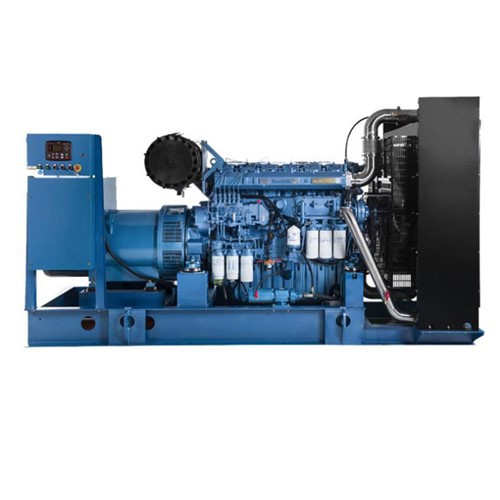
First, let’s get what an industrial diesel generator is straight. These aren’t the little portable things you drag to a campsite or plug into a RV when the power goes out for a night. No, these are heavy-duty units—think 100 kW all the way up to 2,500 kW (even bigger if you need ’em) built to run 24/7, no breaks, for days or weeks at a time. People usually associate ’em with factories, hospitals, data centers, that kind of big-stakes stuff. But when the grid drops unexpectedly, can they step in as emergency power? Short answer: Hell yeah—if you set ’em up right, maintain ’em, and don’t expect a portable unit to pull off a industrial job.
Let’s start with why diesel is the go-to for emergency power, not gas or solar or whatever’s trending. Gas generators? They’re fine for small loads, but gas is flammable, stores for only a few months before it goes bad, and if you need power for more than a day, you’re hauling gas cans nonstop. Solar? Great for when the sun’s out, but what about a week of heavy rain? Or at night? Batteries to back that up are pricey and die if you don’t cycle ’em regularly. Industrial diesel generators? They run on diesel that can sit in a tank for 6-12 months (we treat it with stabilizers, obviously), they’re built to crank on within 10 seconds of a grid failure—way faster than some other units—and they put out consistent power for whatever you need. I once had a small food processing plant client who lost grid power during a storm that knocked lines down for 10 days. Their portable gas unit died after 2 days of running nonstop, but their industrial diesel set? Ran the whole time, no issues, kept their cooling systems going so none of their perishable inventory went bad. That’s the kind of emergency power we’re talking about.
But here’s the thing: you can’t just pick any industrial diesel generator and call it an emergency power unit. A lot of new clients come in saying, “I need a big one for emergencies” and end up buying a unit that’s designed for prime power—like, running constantly as your main source, not a backup. Prime power units are built to handle full load 100% of the time, but emergency units (sometimes called standby units) are built to handle full load only when the grid’s down, so they sit idle most of the time. Wait, hold on—why does that matter? Because if you take a prime power unit that’s never been idled to emergency use, you might have issues with wear and tear, or starting it up when you need it. I see this all the time: someone buys a cheap industrial diesel unit off a random seller, doesn’t check if it’s rated for standby, and then when the power goes out, it won’t start because the fuel injectors gummed up from sitting too long, or the battery died because they forgot to trickle-charge it. As a supplier, I always walk clients through this—we don’t just sell you a unit, we make sure it’s the right one for emergency use, not just the biggest one you can afford.
Let’s talk about real-world scenarios. Who actually uses industrial diesel generators for emergency power? Hospitals, first and foremost. If a hospital loses power, they can’t afford for their MRI machines, operating rooms, life support systems to go dark. We’ve sold units to small rural hospitals—you know, the ones that might be the only medical center within 50 miles—where a storm could knock out power for days. Those units are on automatic transfer switches (ATS), so the second the grid drops, the ATS senses it, sends a signal to the generator, and it starts up before anyone even grabs a flashlight. No fumbling with switches, no delay. That’s the emergency power you need when lives are on the line.
Then there’s data centers. I don’t need to tell you how bad a data outage is—millions in lost revenue, ruined customer data, pissed-off clients. Most hyperscale data centers have industrial diesel generators as their last line of defense (they pair ’em with batteries for the first few seconds, but if the grid’s down longer, the diesels take over). We sold a unit to a small colocation center a couple years back, and they told me a squirrel chewed through a main grid line during a winter storm. The power went out at 2 a.m., and the generator was online in 8 seconds—their clients never even knew there was an outage. That’s the level of reliability industrial diesel brings to emergency power.
Factories too. Especially those that process materials that can’t be interrupted—like a paper mill, or a brewery, or a chemical plant. If a brewery’s fermenting beer and the power cuts out, the whole batch is ruined. I had a manufacturing client last year who had a pipe break at their power substation during a freeze, so grid power was out for 3 days. Their industrial diesel generator ran their entire production line the whole time, no downtime. They told me it saved them $200k in lost product and missed deadlines. Compare that to a portable generator—they would’ve had to rent multiple units, shuttle fuel nonstop, and even then, probably not enough power to run the whole line.
But here’s the catch: you can’t just install an industrial diesel generator and forget about it. That’s a mistake a lot of clients make, and it’s why some people say “diesel generators don’t work for emergencies.” Let’s be clear: if you don’t maintain it, no generator will work. We do annual maintenance checks for all our clients who buy our units for emergency use—changing the oil, replacing filters, testing the battery, running a load test once a quarter. A load test is key: you have to actually run the generator under full load for a little while, not just start it up and let it idle for 5 minutes. If you don’t, carbon builds up in the exhaust system, fuel injectors get clogged, and when you need it, it’ll sputter or shut down. I had a client who skipped a year of maintenance, and when a storm hit, their generator started but died 10 minutes later. He came back to me, and we found carbon buildup in the turbocharger—cost us a couple hours of work to fix, but I told him straight up, “You can’t buy a machine and never take care of it, no matter how tough it is.”
Another thing people worry about: emissions. Industrial diesel generators do produce emissions, but modern units—especially the ones we sell—meet EPA Tier 4 standards, which are super strict. That means they’re way cleaner than old models, and you can install them in most commercial or industrial areas without issues. We also help clients with permitting—because every city has different rules for generator exhaust, noise, fuel storage. Noise is a big one too; if you’re installing it near a residential area, we can add sound attenuators and enclosures so it’s not loud enough to be a nuisance. I had a client who was worried about noise for a factory near a neighborhood, so we worked with an engineer to build a custom enclosure that cut the noise from 85 decibels (like a lawnmower) to 65 (like a normal conversation). That’s the kind of attention to detail you don’t get from a random online seller.
Wait, what about places that don’t have a big industrial site? Can a small business—like a retail store, a restaurant, even a small office—use an industrial diesel generator for emergency power? Yeah, absolutely—if you size it right. A restaurant might only need 50 kW to run their refrigerators, ovens, and lights during an outage, and a small industrial diesel unit (100 kW, max) would handle that. I’ve sold units to coffee shops, grocery stores, even a small clinic in a rural town. The key is sizing: don’t buy a 500 kW unit for a 50 kW load, because that’s a waste of money, and also, it’s not good for the generator—running a big unit at low load for long periods can cause the same issues as not running it enough. We help clients size the generator correctly, no guesswork. A lot of suppliers just push the biggest unit, but we care about making sure it works for their emergency needs, not just their wallet.
Let’s talk about fuel storage too. Emergency power means you need fuel that’s there when you need it, not a tank that’s empty. Industrial generators usually come with a built-in fuel tank, but for longer outages, you need an external tank—sometimes 500 gallons, 1,000 gallons, even more. We work with clients to figure out how much fuel they need. For a 100 kW unit running full load, it uses about 3 gallons an hour. So if you have a 1,000-gallon tank, that’s over 300 hours of run time—more than 12 days. That’s way more than most grid outages last, especially if you’re set up with a fuel delivery contract. I had a client in Florida during Hurricane Ian—grid power was out for 14 days, and their 1,500-gallon fuel tank (paired with a second small tank) kept the generator running the whole time. The local fuel company even prioritized them because they had a contract, so they never ran out.
Now, let’s address the myths. Some people say, “Industrial diesel generators are too expensive for emergency power.” Let’s do the math. A 100 kW industrial diesel generator for standby use is around $15k-$20k, plus installation, ATS, and maintenance. Compare that to the cost of an outage: a small business can lose $10k an hour when power is out. If your outage is 8 hours, that’s $80k lost—way more than the generator. For a hospital or data center, it’s even more. So that upfront cost is an investment, not an expense. We also offer flexible financing, so small businesses don’t have to pay all at once.
Another myth: “Diesel is too expensive to run for emergency power.” Again, math: at $3 a gallon, a 100 kW unit uses 3 gallons an hour, so $9 an hour to run. If your outage is 10 hours, that’s $90. Nothing compared to the lost revenue. And if you’re only running it when the grid’s down, you’re not running it that often—most clients use their generators 2-3 times a year, for a few hours each time. So fuel cost is negligible.
Wait, but what about in extreme cold or extreme heat? Industrial diesel generators are built to handle both. We sell units with block heaters for cold climates (so the engine doesn’t freeze up in winter) and air intakes with filters for hot, dusty areas (like deserts, or factories with wood dust). I had a client in Alaska who used his generator during a winter storm that got to -20°F, and it started right up because we added the block heater. Another client in Arizona, a mine, had their generator run 16 hours a day during a heatwave, no issues because we upgraded the cooling system. It’s not that diesel generators are invincible, but they’re way more adaptable than people give them credit for.
So putting it all together: Yes, an industrial diesel generator set absolutely can be used for emergency power—if you choose the right unit for standby use, size it correctly, maintain it regularly, and set it up with the right accessories (ATS, fuel tanks, sound enclosures, whatever you need). But it’s not a “set it and forget it” product. It’s a critical piece of equipment that needs to be treated like one—because when the power goes out, you can’t afford for it to fail.
As someone who’s been in this game for years, I’ve seen it work when it’s done right, and I’ve seen it fail when it’s not. I don’t want to sell you a generator that’s too big, or the wrong type, or that you’ll neglect. I want to make sure that when the lights go out, your generator kicks in, no questions asked. That’s why we take the time to talk to you about your specific needs: how much power you need, how often you might need it, the climate you’re in, your budget.

If you’re thinking about getting an industrial diesel generator for emergency power—whether you’re a small business, a big factory, a hospital, or anything in between—let’s chat. I don’t do pushy sales stuff, I just answer your questions, show you what works for your situation, and make sure you have a reliable backup when the grid lets you down. No jargon, no hidden fees, just straight talk and a generator that’ll do what it’s supposed to when you need it most.
Silent Diesel Generator Set References:
- U.S. Environmental Protection Agency. (2022). EPA Tier 4 Heavy-Duty Diesel Engine Standards.
- International Organization for Standardization. (2019). ISO 8528: Reciprocating internal combustion engine driven alternating current generating sets.
- National Fire Protection Association. (2021). NFPA 110: Standard for Emergency and Standby Power Systems.
- U.S. Energy Information Administration. (2023). Commercial Building Power Outage Costs and Impacts.
- Diesel Technology Forum. (2022). Modern Diesel Generator Reliability and Performance for Standby Power.
Dianbida Power Equipment (Jiangsu) Co., Ltd.
We’re well-known as one of the leading industrial diesel generator set manufacturers and suppliers in China. We warmly welcome you to buy advanced industrial diesel generator set at competitive price from our factory. If you have any enquiry about pricelist and quotation, please feel free to email us.
Address: No. 23, Nanhuan Road, Jiangdu District, Yangzhou City, Jiangsu Province
E-mail: 19962469616@163.com
WebSite: https://www.js-dbdpower.com/
