As a supplier of PMMA exhaust gas treatment equipment, I’ve witnessed firsthand the intricate dance between exhaust gas concentration and the performance of our systems. This relationship is not just a technical detail; it’s a cornerstone in ensuring effective and efficient waste gas management for industries dealing with PMMA. PMMA Exhaust Gas Treatment Equipment

Understanding PMMA Exhaust Gas
Polymethyl methacrylate (PMMA), commonly known as acrylic, is renowned for its transparency, durability, and versatility. It finds applications in numerous fields, including automotive, construction, and signage. However, the production and processing of PMMA generate exhaust gases that contain a variety of pollutants, such as volatile organic compounds (VOCs), particulate matter, and other harmful substances. These emissions not only pose environmental risks but also endanger the health of workers and nearby communities.
The Significance of Exhaust Gas Concentration
Exhaust gas concentration refers to the amount of pollutants present in a given volume of waste gas. It is a critical parameter that affects every aspect of the PMMA exhaust gas treatment process. High – concentration exhaust gases contain a large amount of pollutants per unit volume, which can put significant strain on treatment equipment. Conversely, low – concentration exhaust gases require different strategies to ensure cost – effective and efficient treatment.
Impact on Treatment Efficiency
One of the most direct impacts of exhaust gas concentration is on the treatment efficiency of our equipment. Our PMMA exhaust gas treatment systems are designed to remove pollutants from waste gases through various processes, such as adsorption, catalytic oxidation, and filtration.
In high – concentration scenarios, the treatment efficiency can be initially high as the equipment is exposed to a large amount of pollutants. However, over time, the treatment media, such as activated carbon or catalysts, can become saturated more quickly. When the treatment media reaches its saturation point, the removal efficiency drops significantly. For example, in an adsorption – based system, if the high – concentration exhaust gas continuously floods the activated carbon, the pores of the carbon will be filled up rapidly, reducing its ability to capture more pollutants.
On the other hand, low – concentration exhaust gases can pose challenges in terms of achieving the desired removal rates. The treatment equipment may need to be adjusted to provide more contact time between the gas and the treatment media. For instance, in a catalytic oxidation system, a lower concentration of pollutants may require a lower flow rate of the exhaust gas to ensure that the catalytic reaction is sufficient to break down the VOCs.
Impact on Equipment Lifespan
Exhaust gas concentration also has a profound impact on the lifespan of PMMA exhaust gas treatment equipment. High – concentration exhaust gases are more corrosive and abrasive, which can cause accelerated wear and tear on the components of the treatment system.
For example, in a wet scrubber system, high – concentration acidic or alkaline pollutants in the exhaust gas can corrode the internal pipes, nozzles, and tanks. The high velocity of the high – concentration gas can also cause erosion of the scrubber walls, leading to leaks and reduced performance. In a thermal oxidation system, the high – temperature operation required to treat high – concentration VOCs can cause thermal stress on the combustion chambers and heat exchangers, shortening their lifespan.
In contrast, low – concentration exhaust gases generally cause less physical and chemical damage to the equipment. However, certain problems may still arise. The long – term operation of the equipment under low – load conditions can lead to fouling and blockage in some components due to the slow deposition of pollutants, which can also affect the overall performance and lifespan of the equipment.
Impact on Operating Costs
Operating costs are a major concern for any industrial operation. The concentration of exhaust gas directly influences the operating costs of PMMA exhaust gas treatment equipment.
For high – concentration exhaust gases, the energy consumption is typically higher. In thermal oxidation systems, more fuel is required to maintain the high temperatures needed to oxidize the large amount of pollutants. Additionally, the frequent replacement of treatment media, such as activated carbon beds or catalysts, can significantly increase the material costs. The need for more frequent maintenance and repair due to the accelerated wear and tear also adds to the overall operating expenses.
In the case of low – concentration exhaust gases, although the energy consumption for oxidation may be lower, the overall cost – effectiveness can still be a challenge. The equipment may need to operate for longer periods to achieve the required treatment levels, which can increase the electricity consumption for fans and pumps. Moreover, the cost of treating low – concentration gases may be relatively high on a per – unit – pollutant – removed basis.
Tailoring Solutions Based on Concentration
As a supplier, we understand that a one – size – fits – all approach does not work when it comes to PMMA exhaust gas treatment. We offer customized solutions based on the specific exhaust gas concentration of each client.
For high – concentration exhaust gases, we recommend pre – treatment steps such as dilution or condensation to reduce the load on the main treatment equipment. Our advanced thermal oxidation systems are designed with high – performance catalysts and robust construction materials to handle the high – temperature and high – corrosion environment. We also provide regular maintenance and replacement schedules for the treatment media to ensure continuous high – efficiency operation.
For low – concentration exhaust gases, we focus on optimizing the contact time between the gas and the treatment media. We may use multi – stage treatment processes, such as combining adsorption and membrane separation, to improve the removal efficiency. Energy – efficient equipment is also a priority, with features like variable – speed fans and heat recovery systems to reduce operating costs.
Conclusion
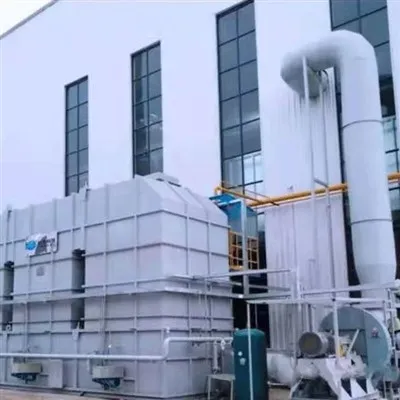
In conclusion, the exhaust gas concentration has a far – reaching impact on PMMA exhaust gas treatment equipment, affecting treatment efficiency, equipment lifespan, and operating costs. As a supplier, our goal is to provide our clients with the most effective and cost – efficient solutions tailored to their specific exhaust gas characteristics.
PMMA Exhaust Gas Treatment Equipment If you are facing challenges in PMMA exhaust gas treatment or are looking to upgrade your existing equipment, we invite you to reach out to us. Our team of experts is ready to discuss your requirements and provide customized solutions that meet your needs. We believe that by working together, we can achieve both environmental protection and business success.
References
- Smith, J. (2018). Industrial Waste Gas Treatment Technologies. CRC Press.
- Doe, A. (2020). The Impact of Pollutant Concentration on Air Treatment Systems. Journal of Environmental Science and Technology.
- Wilson, B. (2019). Design and Optimization of PMMA Exhaust Gas Treatment Equipment. International Journal of Chemical Engineering.
Wuxi Quansheng Industrial Equipment Co., Ltd.
As one of the most professional PMMA exhaust gas treatment equipment manufacturers and suppliers in China, we have world-leading production equipment and strong manufacturing capabilities. Welcome to buy high quality PMMA exhaust gas treatment equipment for sale here from our factory. For price consultation, contact us.
Address: No.10, Fulaiqiao Road, Hudai Town, Binhu District, Wuxi City, Jiangsu Province, China
E-mail: 397293586@qq.com
WebSite: https://www.pmmatech.com/
