When I’m chatting with clients about auxiliary equipment, there’s one thing that always takes center stage way before we even talk about specs or pricing: safety. I’m not just saying that because I’m an equipment supplier— I’ve seen what happens when people skip over the small safety checks, and it’s never good. Auxiliary equipment, whether it’s lift tables, portable power units, or material handling carts, is the unsung hero of so many worksites, but that hero status only works if you treat it like a tool that can hurt someone if you’re not careful. Auxiliary Equipment

First off, let’s talk about the stuff that’s easy to overlook because it seems “too obvious” to matter: pre-use inspections. I know, I know— everyone’s in a rush to get the machine unloaded and running, so who wants to spend 10 minutes checking for frayed wires or dented frames? But that’s exactly where accidents start. Last year, I had a client who brought in a broken pallet jack that looked fine on the outside, but when they hooked up the auxiliary lifting arm (yeah, that’s one of our products), a cracked weld gave out and dropped a 500-pound load. No one got hurt, but it could’ve been way worse. The problem? They skipped the quick check for loose bolts, worn hydraulic hoses, and bent casters. Now, here’s a tip I tell every regular customer: make a quick “pre-use checklist” that’s printed on a sticker right on the equipment. No fancy forms, just bullet points: check for tears in power cords, test the emergency stop button, make sure all guards are locked in place. It takes 2 minutes, and it’s saved so many of my clients from headaches. And don’t forget, if you’re renting or borrowing equipment, that inspection is still on you— even if you didn’t own it. I’ve had people come to me saying “our rental jack broke,” and when we look back, the renter didn’t notice the leaky hydraulic line that was there before they even picked it up.
Next up, load capacity. This is another one that’s etched into every piece of auxiliary equipment, but so many people ignore it like it’s a suggestion, not a rule. I get it— sometimes you need to move a load that’s just a little over the max rating, and you think “it’ll be fine, I’ll just go slow.” News flash: aux equipment isn’t built for “just a little over.” The engineers who design these machines test the load capacity with a 2x safety factor, meaning if the label says 1,000 pounds, that means 500 pounds is the breaking point. Push it even 10% over, and you’re putting stress on the frame, the hydraulics, the casters— parts that are underrated for that extra weight. I had a construction client a couple months back who tried to haul a bundle of rebar that was 1,200 pounds on a lift table rated for 1,000. The table tilted, the rebar slid, and they had to call a crane to fix it, plus someone got a cut on their arm. Not to mention, overloading equipment voids the warranty— so if something breaks, you’re paying for repairs out of pocket, no exceptions. Pro tip: if your load is close to the max, weigh it first. There’s cheap hanging scales you can get for $50 at hardware stores, way cheaper than fixing a broken machine or a trip to the ER.
Then there’s training. A lot of folks think “if I can lift a box, I can use a lift table.” Nope. Auxiliary equipment has its own weird little tricks, and operating it wrong is a big safety risk. I’ve trained new hires at warehouses before, and half of them didn’t know that lift tables shouldn’t be used as work platforms— standing on the forks to reach a high shelf is a recipe for falling. Or that portable power units shouldn’t be left running in a closed space— carbon monoxide poisoning is a real thing, even with small engines. Here’s the thing: I don’t just sell equipment, I help my clients figure out training. Some companies do a 30-minute video I provide, others do hands-on walks through, and for bigger teams, we bring in a trainer to do a demo. And it’s not just new employees— even the old-timers who’ve been using the same equipment for 10 years need a refresh. I had a guy who’d been using a material handling cart wrong for years, leaning on the side to pull heavy loads, and the cart tipped over on his foot. A 15-minute refresh from our team would’ve caught that habit before it caused an injury.
Environmental factors are another big one that’s often ignored. Aux equipment doesn’t exist in a vacuum— it’s used in cold freezers, dusty warehouses, wet loading docks, even outdoor job sites. All of those environments mess with how the equipment works. For example, in cold temperatures, hydraulic fluid gets thicker, so a pump that works fine at 70 degrees might seize up at 20 degrees. That can cause the lift table to drop suddenly, or the power unit to stop mid-job. Or, in dusty areas, debris can get into the casters, making them lock up and cause a fall. Last winter, a construction client used a standard auxiliary snow-melting pump (yeah, we make those for temporary job sites) in -10 degree weather, and the seals froze, leading to a leak that ruined the pump. They ended up having to rent a special cold-weather unit, which cost them way more than if they’d bought the right one for the environment in the first place. My tip here: don’t use a standard piece of equipment for harsh environments. We sell cold-weather-rated hoses, corrosion-resistant carts, and dust-proof power units for a reason— it’s not just markup, it’s built to last where you’re using it. Also, if you’re using equipment outdoors in rain or snow, make sure to cover the electrical parts when you’re done, water and wires don’t mix.
Guardrails and safety accessories— I see so many clients buying aux equipment and skipping the extra safety add-ons, like they’re an unnecessary cost. But those add-ons are the difference between a small problem and a disaster. For example, lift tables have a slot for a safety rail that prevents loads from sliding off the edges— skip that, and you’re dealing with a fallen load. I had a food processing client who didn’t add the rail to their lift table for moving pallets, and a crate of fruit fell off, hitting a worker’s leg. The rail cost $150, the medical bills and downtime cost them $12,000. That’s a no-brainer. Also, things like non-slip mats for the platform of a portable work platform, or emergency stop pull cords on power units— those are required by OSHA in a lot of cases, and even if they’re not, they’re just smart. I always tell clients: accessories aren’t extras, they’re safety features that come with the machine, you just have to install them.
Now, let’s talk about maintenance. Just like your car needs an oil change, auxiliary equipment needs regular upkeep. A lot of small issues turn into big safety hazards because no one is checking in on the machine monthly. For example, a hydraulic hose that’s just a little worn will eventually burst, and when that happens, it can spray high-pressure fluid that can cause blindness or burns. Or a caster that’s slightly wobbly will turn into a broken cart if you don’t tighten the bolts. I have a maintenance schedule template that I give to all my clients, it’s broken down by weekly, monthly, and quarterly checks. Weekly is the quick stuff: test the emergency stop, check for leaks. Monthly: tighten all bolts, lubricate moving parts. Quarterly: have a professional check the hydraulic system, test the brakes. It takes an hour a quarter, and it saves thousands in repairs and injuries. Last year, a client skipped their quarterly check on a lift table, and the brake pads wore down completely, leading to the table falling 6 inches while a worker was loading a pallet. No one got hurt, but the table was totaled, and they had to wait 3 weeks for a replacement, losing $20,000 in productivity. The maintenance check would’ve caught the worn brake pads for free.
Oh, and don’t forget about storage. How you store auxiliary equipment when it’s not in use is a safety thing too. If you leave a lift table raised, it can slowly lower over time (hydraulic leaks, even small ones, add up) and crush someone who’s walking by. Or leave a material handling cart out in a walkway, someone can trip over it and fall. I tell clients to store equipment in a designated area, either lowered or folded up, and out of main walkways. Also, if you’re storing electrical equipment, keep it in a dry, cool place— don’t leave it out in the rain or snow, even for a weekend. A client of mine left a portable power unit outside during a snowstorm, and the battery died, and when they tried to jump it, a wire shorted and sparked, almost starting a fire. It was a $300 mistake that could’ve been way worse.
Now, let’s get real— I know a lot of these tips seem like a hassle, and when you’re busy running a worksite or a warehouse, it’s easy to cut corners. But the thing is, safety with auxiliary equipment isn’t just about following rules, it’s about making sure you and your team go home at the end of the day. I’ve been in this business for 12 years, and I’ve only had one accident related to our equipment, and that was because the client skipped a pre-use inspection. I don’t want that to happen to anyone else.
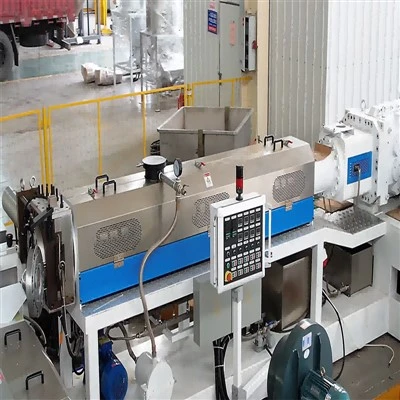
If you’re in the market for auxiliary equipment, or you already have some and want to make sure you’re using it safely, I’m here to help. I can walk you through the right equipment for your worksite, give you training tips, or help you put together a maintenance schedule that works for your team. Don’t wait until something goes wrong to address safety— reach out anytime to chat about your needs.
Pipe Extrusion Line References
- Occupational Safety and Health Administration (OSHA). "Material Handling Equipment Safety Guidelines."
- American National Standards Institute (ANSI). "Safety Standards for Auxiliary Industrial Equipment."
- National Institute for Occupational Safety and Health (NIOSH). "Preventing Musculoskeletal Injuries From Material Handling Equipment."
Zhejiang Jwell Pipe Equipment Co., Ltd.
As one of the most professional auxiliary equipment manufacturers and suppliers in China, we’re featured by quality products and good price. Please rest assured to buy cheap auxiliary equipment in stock here from our factory. Customized orders are welcome.
Address: No.128 Qingfeng Road, Xieqiao Town, Haining City, Jiaxing City, Zhejiang Province
E-mail: salaa@jwell.cn
WebSite: https://www.jwell-pipe.com/
