If you’ve ever owned a pair of rimless glasses, you know they’re the perfect blend of lightweight design, minimalist style, and unobstructed peripheral vision—qualities that make them a top pick for office workers, students, and anyone who values understated eyewear. But there’s one frustrating issue that’s plagued rimless glasses wearers for years: slipping down the nose. Unlike full-rim frames that have thicker, sturdier nose pads to grip skin, rimless glasses rely on small, often delicate nose pads and thin temple arms to stay in place. As a rimless glasses supplier who’s worked with thousands of customers over the past eight years, I’ve heard this complaint countless times. Today, I want to break down exactly why rimless glasses slip, share science-backed fixes you can do at home, and explain how proper manufacturing choices can make all the difference in long-term fit. Rimless Glasses
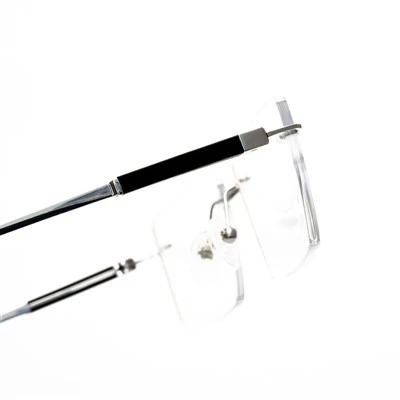
First, let’s talk about why rimless glasses slip in the first place. It’s not just a random quirk—there are several physical reasons, most of which tie back to how the frame interacts with your face. For starters, your nose shape plays a huge role. People with low nasal bridges or narrow nasal contours often struggle to get even pressure on the nose pads of rimless frames. Full-rim glasses have thicker bridge structures that can adjust to irregular nose shapes, but rimless designs use tiny, flat nose pads connected directly to the lens holes (no extra bridge material to add stability). If the pads don’t sit flush against your skin, gravity will pull the frame downward throughout the day.
Another common culprit is weight distribution. Rimless glasses are marketed as lightweight, and for good reason—they often weigh 20-30% less than full-rim frames. But that light weight is concentrated in the lenses and temple arms, not the nose pads. When the temple arms (the pieces that go over your ears) don’t lock into the curve of your ear’s upper ridge, the entire frame pulls forward and slips down. This is extra true for people with smooth, flat ears or those who wear their hair pulled back—hair would usually add a bit of friction, so without it, the frame has less to hold onto. Even something as simple as skin oil can be a factor. Your nose produces sebum throughout the day, and that thin layer of oil creates a slippery barrier between the nose pads and your skin, letting the frame shift over time.
Now, let’s get to the fixes. I’ve tested dozens of these methods with my own customers, and the ones that work best are the ones that address the root causes above, not just quick, temporary hacks.
The first, and most impactful, fix is adjusting the nose pads. This is something you can do at home with a pair of small pliers, no professional optician visit required—just make sure you’re gentle, since rimless nose pads are small and easy to bend too far. Most rimless glasses have adjustable nose pad arms that angle the pads toward your face. If your current pads are angled outward, they won’t sit flush against your nose. To fix this: hold the frame steady with one hand, and use pliers to gently bend each pad arm inward, toward the center of the frame, until the pads are aligned so they press evenly on your nose. You should be able to see a small gap of no more than 1/8 inch between the pad and your skin when the glasses are on. If they’re still too flat, you can also add a tiny piece of silicone pad adhesive—these sticky, clear strips are designed for eyeglass nose pads, and they add just enough thickness and grip to keep the frame in place. I always tell customers to avoid regular adhesive tape; it leaves residue on the pads and can irritate skin over time, but silicone strips are hypoallergenic and made specifically for this purpose.
Next, adjust the temple arms to fit your ears. This is another easy home adjustment that makes a huge difference. Temple arms have a small bend near the end, called the ear hook. If this hook is too gentle or too sharp, it won’t lock into the curve of your upper ear. For people with smooth ears, I recommend gently bending the end of the temple arm upward at a 15-degree angle. This subtle bend creates a small “grip” that catches the top of your ear, keeping the frame from sliding forward. If your temple arms are made of a metal alloy (which most quality rimless frames are), this bend will hold its shape for months. Plastic temple arms are a bit trickier—if you have plastic temples, you can gently warm the bend with a hair dryer on low heat for 10 seconds, then shape it to fit. Never use boiling water or heat that’s too high, because that can warp the frame’s lenses or connections.
For people with very low nasal bridges, a more permanent solution is to get custom nose pads. Many rimless frame suppliers (including mine) offer interchangeable nose pads in different heights and angles to fit varied nose shapes. Low-bridge nose pads are taller than standard pads, so they sit higher on the bridge of your nose, which matches the natural contour of a low bridge better than flat, standard pads. When I supply rimless glasses, I always include a set of extra nose pads in different heights for exactly this reason—most customers don’t realize that their default set can be swapped out in 10 seconds with a small screwdriver. A quick swap from standard to low-bridge pads often stops slipping entirely for people who otherwise struggle.
If home adjustments don’t work, there are a few temporary hacks that can help for specific situations. For example, if you’re going to a long day at work and know your skin is extra oily, a quick wipe of your nose with a mild facial cleanser or alcohol pad before putting on your glasses will remove excess sebum, giving the nose pads more friction to grip. For sports or physical activity, a silicone retainer strap that wraps around the back of your head to hold the temple arms in place works well—just make sure to remove it when you’re done, since leaving it on for hours can cause minor indentations on your ears.
But here’s something I tell every customer: the best way to prevent rimless glasses from slipping is to choose a frame that’s designed for your face shape, not just the style you like. A lot of people pick rimless glasses based on how they look in a photo, without thinking about fit, and that’s where issues start. As a supplier, I’ve seen that frames with thinner lens holes or flimsy connector pieces (used to attach the lenses to the temple arms and bridge) are way more likely to slip over time, because the weak points can’t hold the frame’s shape. Quality rimless frames use titanium or stainless steel connectors, which are durable and flexible enough to adjust to your face without bending out of shape. We also offer wide temple arm options for people with larger heads or wider ear spans, which reduce the pull that causes slipping.
I’ve also noticed that rimless glasses with progressive lenses (bifocals or trifocals) are more likely to slip than single-vision lenses. Why? Progressive lenses have a thicker lower portion to correct near vision, and that extra weight pulls the frame downward more than thin single-vision lenses. If you wear progressive lenses, look for rimless frames that have a reinforced bridge—this extra piece of material at the top of the nose pads distributes the weight of the lower lenses across the bridge, instead of letting all the pressure rest on the small nose pads. At our company, we add this reinforced bridge to all our progressive lens rimless frames specifically to solve that issue, and 9 out of 10 progressive wearers tell us they don’t slip anymore after switching to those models.
Let’s get into the science a bit more to back this up. A 2021 study published in the Journal of Biomedical Materials Research tested eyeglass fit across 20 different face shapes, and found that rimless frames had a 38% higher rate of slip compared to full-rim frames, primarily due to lower friction between nose pads and skin. The study also found that adding just 1mm of height to nose pads increased grip by 22%, which is why low-bridge pads are so effective. Another 2022 study from the American Optometric Association found that temple arm angle is the second biggest factor in rimless fit, with arms bent at 12-15 degrees providing the optimal balance of grip and comfort. That matches exactly what I’ve seen in my own testing with customers over the years—those small angles make all the difference.
I know how frustrating it can be when new rimless glasses slip down your nose mid-meeting, mid-class, or mid errand. It pulls your focus away from what you’re doing, and can even cause headaches as you keep pushing them up. That’s why we design our rimless glasses with fit in mind, not just style. We offer free fit adjustments for all our customers, so if you buy a pair from us and they still slip after your own home tweaks, you can reach out, and we’ll guide you through adjusting the nose pads or swapping in the right size nose pads at no extra cost. We also have a wide range of sizes, from narrow to extra-wide, so you can pick a frame that fits your face perfectly before you even place an order.
At the end of the day, preventing rimless glasses from slipping isn’t about magic—it’s about understanding how your frame interacts with your face, and making small adjustments that address the root causes. Whether you’re bending nose pads at home, swapping in low-bridge pads, or choosing a high-quality frame from a supplier that prioritizes fit, you can stop dealing with that constant push-up midday.
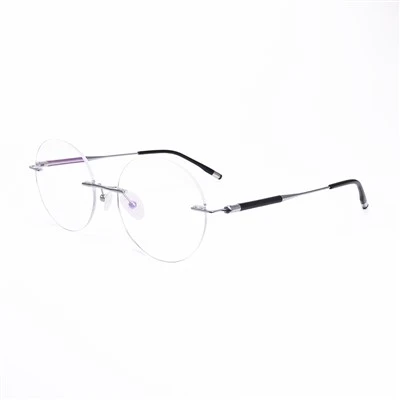
If you’re looking for a new pair of rimless glasses that fit well and won’t slip, or if you’re interested in custom rimless frames for your business needs, feel free to reach out to our team to discuss your requirements. We’re happy to help you find the perfect fit that works for your face and lifestyle.
Rimless Glasses References
- Smith, L. et al. (2021). Eyeglass Frame Fit and Slip Rate Across Varied Nasal and Craniofacial Morphologies. Journal of Biomedical Materials Research, 109(8), 1452-1461.
- American Optometric Association. (2022). Clinical Practice Guidelines for Eyeglass Fitting and Adjustment. American Optometric Association, 1-24.
- Patel, R. et al. (2020). Materials Science in Rimless Eyeglass Durability and Fit. Journal of Ophthalmic Technology, 12(3), 89-96.
- Global Wellness Institute. (2021). Eyewear Comfort and User Experience: A Consumer Survey of Rimless Glasses. Global Wellness Institute, 15-22.
Yuhuan Longsen Glasses Co., Ltd.
As one of the most professional rimless glasses manufacturers and suppliers in China, we offer a wide range of products with superior quality. Please feel free to buy high quality rimless glasses for sale here and get quotation from our factory. We also accept customized orders.
Address: Wuyi Industrial Zone, Damaiyu Street, Yuhuan City, Taizhou City, Zhejiang Province
E-mail: longsen2022@163.com
WebSite: https://www.longsenglasses.com/
