Alright, let’s cut to the chase—if you’ve ever walked across a wobbly bridge, clung to a cargo net, or balanced on a tightrope 20 feet up at a ropes course, you’ve probably wondered what kind of rope’s holding all that weight together. As a 3 strand rope supplier, I get this question all the time from course builders, adventure park owners, and even weekend warriors who want to set up their own backyard obstacle course. The short answer? Yes—but not all 3 strand ropes are created equal, and there’s way more to this than just grabbing any old rope from the hardware store. Let’s break this down like I would chatting with a regular at my shop, no stuffy jargon or fake corporate fluff. 3 Strand Rope
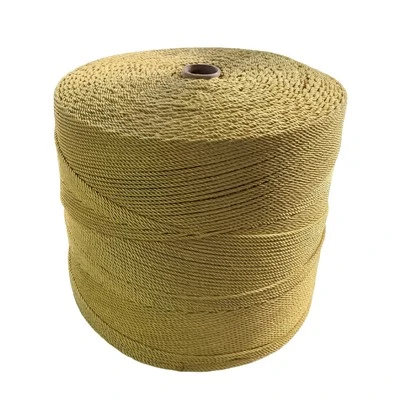
First, let’s remember what a 3 strand rope actually is, because a lot of people mix this up. Unlike braided ropes (the smooth, single-ply kind you see on tow trucks or jump ropes) or static/dynamic ropes for climbing, 3 strand rope is exactly what it sounds like: three separate strands twisted together in a specific direction, right-hand lay, if we’re being technical. These strands are usually made of nylon, polyester, polypropylene, or a blend—each material has its own vibe, and that’s make-or-break for ropes course use.
Wait, let’s start with the biggest thing that matters for ropes courses: safety. No one’s testing a backyard balance beam on a rope that can snap under the weight of two adults and a 10-pound backpack, am I right? 3 strand ropes, when engineered properly, have insane tensile strength. Let’s do the math (easy, I promise). A standard 1-inch nylon 3 strand rope, for example, can hold somewhere around 18,000 to 20,000 pounds of breaking strength. That’s way more than you need for a typical ropes course element—most low-ropes (the ones on the ground or just a foot or two up) only need to support a few hundred pounds, and even high-ropes (20+ feet up) top out at like 3,000 pounds max, even with two people hanging on. So strength-wise, 3 strand is totally capable. But here’s the catch: cheap 3 strand rope from the dollar store? That’s not the same as industrial-grade. Dollar store rope is often made with thin, low-quality polypropylene that stretches way too much, frays after a few uses, and can snap if it’s left out in the sun. I see this all the time—someone buys a cheap roll, makes a course, and within a month, half the ropes are splitting. Don’t do that.
Next up: stretch. This is non-negotiable for ropes courses. If a rope stretches too much when someone steps on it, you end up with a huge, wobbly swing that makes people panic—and worse, it creates unnecessary stress on the rope’s ends (the eye splices we’ll talk about later) which can cause failure. Polyester 3 strand has almost zero stretch—like, less than 10% under load, compared to nylon’s 20-30% stretch. That’s why polyester is the go-to for permanent ropes courses. Nylon is better for temporary stuff, like a pop-up course at a fair, because it absorbs shock a little better if someone falls, but it will stretch over time, so you have to retension it every few months. Polypropylene? It stretches so much it’s basically useless for anything more than a kids’ backyard obstacle course that only gets used once a year.
Then there’s durability, especially when it comes to weather. Ropes courses are outside 365 days a year, rain or shine, hot or cold. UV rays are a killer—they break down the fibers in rope, making it brittle and weak. Industrial-grade 3 strand ropes are treated with UV inhibitors, which stops that from happening. Cheap rope doesn’t have this, so after a summer of being in the sun, it’s like a piece of dry spaghetti. Also, water absorption: nylon absorbs a ton of water, which makes it heavier, weaker, and prone to mold if it doesn’t dry out. Polyester barely absorbs any water, so it’s perfect for courses that get rained on all the time or are near a lake. I had a customer last year who runs a ropes course at a beach—he swears by our polyester 3 strand rope, says his old nylon rope would get so heavy after a storm, it’d sag so bad you could touch the ground, and now with polyester, the sag is almost non-existent.
Now, let’s talk about the part most people overlook: the ends. A rope is only as strong as its weakest point, and for ropes courses, that’s almost always the splice where the rope is attached to posts, anchors, or other elements. 3 strand ropes are perfect for splicing, which is way stronger than tying a knot (knots can reduce a rope’s strength by 30-50%, while a good eye splice is almost 100% of the rope’s original strength). Braided ropes are trickier to splice, especially for beginners, so a lot of course builders prefer 3 strand for that reason alone. Wait, but make sure the splice is done right—if it’s a lazy splice that’s only 6 inches long, that’s bad. It needs to be at least 6 times the rope’s diameter, so for a 1-inch rope, that’s 6 feet of splice. I offer free splicing guides and even discounted professional splices for my regular customers, because I know how important that is.
But let’s be real, there are times when 3 strand rope isn’t the best pick. If you’re building a high-end adventure park with zip lines or dynamic elements (think a swinging bridge that moves a lot), a static kernmantle rope is usually better, but that’s a whole other topic. For most standard ropes course elements—balance beams, cargo nets, climbing walls (the rope holds the wall up, not the climber), low-ropes courses, even backyard courses for schools or camps—3 strand is totally fine. I’ve had customers use my 1.25-inch nylon 3 strand ropes for a 30-foot high tightrope, and it’s held up for 5 years now, with no issues as long as they retension it every season.
Wait, let’s address the elephant in the room: misconceptions. A lot of people say “3 strand rope is old school, braided is better for courses.” No, that’s not true. Braided rope is smoother, so it’s less likely to fray when you’re climbing on it, but for structural elements (the ropes that are the actual course, not the holds), 3 strand is just as good, if not better, because of its tensile strength and ease of splicing. Also, cheap braided rope is just as bad as cheap 3 strand—same UV issues, same low quality. The key is the material and the grade, not the construction.
Another thing: cost. If you’re on a budget, 3 strand rope is way cheaper than most kernmantle or braided structural ropes for courses. That doesn’t mean you should skimp, but if you buy industrial-grade 3 strand from a reputable supplier, you’re getting a lot more rope for your money, which is a big win for schools, non-profits, or small adventure parks that don’t have a huge budget. I work with a lot of youth camps that have small yearly budgets, and they come to me because they can get 500 feet of high-quality 1-inch polyester rope for half the price of a comparable braided structural rope.
Let me share a real quick story to back this up. Last year, a summer camp in Ohio bought 300 feet of cheap 3 strand rope from a big box store for their new low-ropes course. Within two months, one of the main ropes snapped—turns out, the polypropylene they used had no UV treatment, so it was brittle from sitting in the sun all summer. They came to me, bought my UV-stabilized polyester 3 strand rope, and it’s held up for two years now. They told me the difference is night and day—no sagging, no fraying, and the kids don’t have to worry about stepping on a weak spot.
Now, what are the best practices if you do use 3 strand rope for your ropes course? First, inspect the rope regularly—look for frays, broken strands, discoloration (that’s a sign of UV damage), and any soft spots. If you see any of that, replace it immediately. Second, make sure you’re using the right size for the job—don’t use a ½-inch rope for a high-ropes element, that’s just reckless. Third, store the rope properly when it’s not in use—keep it in a dry, shaded area, don’t leave it coiled in the sun for weeks on end. Fourth, use the right splices and anchors—don’t tie knots in the main rope, use thimbles at the ends to protect the eye splice from wear.
Wait, also, for cargo nets, a lot of people use 3 strand rope tied together, but make sure the knots are tight and you check them every month. Some builders prefer to splice sections together, which is stronger. I’ve had customers make entire cargo nets with my ⅜-inch 3 strand nylon rope, and it’s held up for years with thousands of kids climbing on it.
Is there any scenario where 3 strand rope shouldn’t be used? I’d say for zip lines, dynamic rescue elements, or courses that require a lot of movement and shock loading, kernmantle rope is better, but for 90% of standard ropes course elements, 3 strand is perfect. It’s durable, strong, easy to work with, and cost-effective—three things that matter a lot when you’re building a course that needs to be safe and last.
At the end of the day, when it comes to ropes courses, safety is everything. You can skimp on decor, you can skimp on the number of elements, but you can’t skimp on the rope. As a 3 strand rope supplier, I don’t just sell rope—I help people build courses that are safe, fun, and last. If you’re a course builder, a camp owner, a school administrator, or even someone looking to build a backyard course for your kids, feel free to reach out to chat about what’s right for your needs. I don’t do pushy sales stuff—just honest advice, quality rope, and support to make sure your course is up to code and safe for everyone.
So to wrap it up: yes, 3 strand ropes absolutely can be used for making ropes courses, as long as you pick the right grade (UV-stabilized, industrial-grade, not cheap hardware store junk), match the material to your specific use case (polyester for permanent, nylon for temporary), and do the splicing and maintenance right. It’s not the only option, but it’s a great, reliable, cost-effective one for most projects.
If you’re looking for rope for your next ropes course, drop a line to chat through your needs—whether you need a custom length, professional splicing, or just advice on what material works best for your climate and elements.
Paper Bag Handle Ropes References:
- Occupational Safety and Health Administration (OSHA). (2021). Safety Standards for Ropes Courses and Adventure Education Facilities.
- American Society for Testing and Materials (ASTM). (2019). Standard Specification for Fiber Ropes for Structural Use in Recreational Facilities.
- International Ropes Course Association (IRCA). (2022). Guide to Material Selection and Maintenance for Ropes Course Structures.
- DuPont Technical Bulletin. (2020). Performance Characteristics of Nylon and Polyester Fiber Ropes for Outdoor Recreational Applications.
- National Recreation and Park Association (NRPA). (2021). Best Practices for Ropes Course Design and Construction.
Tengzhou Fujin Plastic Products Co., Ltd.
As one of the most professional 3 strand rope manufacturers and suppliers in China, we also support customized service. With abundant experience, we warmly welcome you to buy bulk 3 strand rope made in China here and get pricelist from our factory. For price consultation, contact us.
Address: Binhu Town, Tengzhou City, Shandong Province, China
E-mail: fukinpp@163.com
WebSite: https://www.tzfujin.com/
