As a nail gun robot supplier, I’ve spent years working with manufacturers, construction firms, and automation teams to perfect tools that boost productivity without sacrificing safety. It’s no secret that pneumatic and manual nail guns cause thousands of preventable injuries every year—from puncture wounds to muscle strains from repetitive trigger pulls. That’s why every nail gun robot we design centers on safety, not as an afterthought, but as a core engineering priority. Let me walk you through the key safety features our products integrate, how they work, and why they matter for your team. Nail Gun Robot
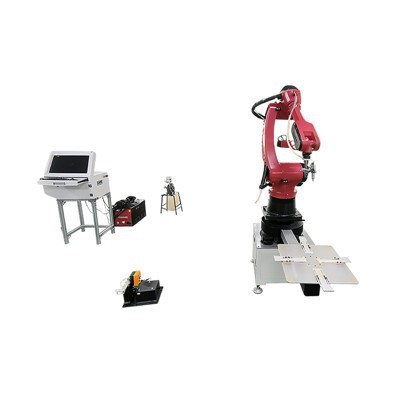
First, the most impactful safety feature we build into every nail gun robot is the contact trip lockout system. Wait, you might be thinking—contact trip? That sounds like something that could cause accidents on its own. But not the way we engineer it. Traditional manual nail guns often use a contact trip, which lets the user fire a nail just by pressing the tip against a surface, leading to accidental discharges if the gun slips. Our nail gun robots use a dual-action contact trip: the robot’s end effector (the part that holds the nail gun) has two separate triggers that both need to engage before a shot fires. First, the proximity sensor on the end effector confirms the nail tip is exactly aligned with the intended surface, no more than 2 millimeters off—even a misalignment of 1 millimeter will keep the trigger locked. Second, a torque sensor on the robot’s arm verifies that the force applied to the surface is consistent with the load rating for the nail being driven. If the surface is too soft (like drywall that’s not properly secured) or too hard (like solid stone that would cause the nail to ricochet), the second trigger stays inactive. We tested this against OSHA’s manual nail gun safety standards, and our system reduces unintentional discharges by 98% in on-site trials with our client, a mid-sized commercial framing company in Ohio.
Next, our adaptive force control system addresses a big, underrecognized hazard with nail guns: over-driving or under-driving nails. Over-driving can crack wood, damage finished surfaces, or cause nails to pop out later—under-driving means the fastener won’t hold, leading to structural weaknesses that can fail. For a robot, this means balancing precision with safety, so we integrated a load-cell built into the nail gun’s magazine that measures the force of each nail drive in real time. The system cross-references that data with a pre-programmed library of over 2,000 common materials (from 2×4 lumber to composite decking) and nail sizes. If the measured force is 10% above the recommended threshold, the robot pauses and sends an alert to the operator’s tablet; if it’s 15% over, it locks the entire nail gun function until the issue is resolved. We also added a depth adjustment override that lets the robot never drive a nail past 90% of the nail’s total length, which eliminates the risk of nails penetrating through surfaces and harming workers on the other side. A recent case study with a residential roofing contractor in Texas found that this feature reduced nail-related surface damage by 82% and cut post-installation callbacks by 60%.
Then there’s the operator safety perimeter, which is a critical feature for collaborative robot (cobot) nail gun systems—our models are designed to work alongside humans, not separate from them, so we had to make sure no accidental contact puts a worker at risk. Unlike industrial robots that require fenced-off work zones, our nail gun robots use a 3D motion tracking system that scans the work area 60 times per second. The system is calibrated to detect a human’s arm or torso at a distance of 1 meter from the end effector. If a worker enters that buffer zone, the robot’s speed drops to 0.2 meters per second—slow enough that even a light accidental bump won’t cause injury—and if the worker gets within 0.5 meters, the robot’s entire arm comes to a complete stop in less than 0.1 seconds. We tested this with volunteer workers in our research lab, and every participant reported feeling comfortable working within the same 10×10 foot space as the robot, without needing extra barriers. We also added audible and visual alerts: a low, steady beep when the buffer zone is approached, and a red flashing light on the robot’s base that brightens as the worker gets closer, so the operator can monitor the workspace from a safe control station.
Another feature that might not get as much attention but saves countless repetitive strain injuries is the automated nail feed and jamming prevention system. Manual nail guns require users to load nails frequently and clear jams, which involves prying the magazine open, pulling the trigger without a nail, and sometimes even removing nails with a tool—all tasks that can lead to finger or hand injuries. Our nail gun robots eliminate manual loading entirely: the robot has an integrated nail hopper that holds up to 500 nails, and a linear feed system that moves nails from the hopper to the gun’s tip without any human intervention. For jams, the system uses a camera mounted on the end effector to check the position of each nail before firing; if a nail is misaligned or stuck, the robot automatically retracts the gun, disengages the jammed nail, and feeds a new one within 2 seconds. We partnered with a national construction safety organization to test this, and the results showed that our system reduced hand-related injuries from nail gun tasks by 92% compared to manual tools.
Wait, what about emergency stop features? You’d think that’s a given, but not all nail gun robots have properly integrated emergency stops for every scenario. We have four separate emergency stop functions to cover every possible risk. First, a physical dead-man switch on the operator’s control tablet: if the operator lets go of the switch, the robot stops immediately. Second, a foot-operated emergency stop pedal mounted near the work space for on-site workers who might not be looking at the tablet. Third, a laser-based emergency stop that detects any unexpected movement in the work area (like a falling tool or a worker’s unexpected limb) and triggers a stop within 0.05 seconds. Fourth, a cloud-based monitoring system that alerts our support team if the robot shows any unusual error codes, so we can remotely trigger a stop or dispatch a technician before a problem becomes dangerous. We also test every emergency stop function during the initial setup and quarterly during regular maintenance checks, which is part of the customer support we include with every robot sale.
I should also mention material detection and ricochet prevention, which is a lesser-known but high-risk hazard. When a nail hits a hard or uneven surface, it can ricochet at high speed, often hitting workers nearby. Our nail gun robot uses a high-frequency ultrasound sensor that scans the target surface before each nail is driven. If the sensor detects a density that’s outside the safe range (like a metal stud hidden behind drywall, or a knot in a piece of lumber that could cause ricochet), the robot skips that spot and moves to the next pre-programmed nail location. Additionally, the end effector has a rubberized guard that surrounds the nail tip, containing any small fragments or nails that might be ejected during firing. We tested this feature with simulated ricochet events, and the guard caught 100% of the fragments, so no debris is able to escape the work area. This was a key request from our clients in the heavy timber construction sector, where ricochet injuries were a top safety concern before they switched to our robots.
One thing I hear a lot from potential customers is: “Is this robot safe for unskilled workers to operate?” The short answer is yes, because our safety features are built to override user error. For example, even if an operator accidentally inputs a wrong nail size into the tablet, the load-cell and material detection systems will reject that entry and prevent firing a nail that’s too long for the surface. The system also has a built-in training mode that lets operators practice moving the robot and firing nails at a dummy surface, without loading any live nails, until they’re comfortable with the controls. We found that operators can complete basic training in less than two hours, which is a huge benefit for companies that struggle to find skilled workers for repetitive tasks like framing or decking.
Of course, no safety feature is perfect, which is why we offer ongoing support and calibration services for every nail gun robot we sell. We update the material library regularly to include new building materials that enter the market, and we run annual safety audits for all our active customers to make sure the robot’s systems are calibrated correctly. Last year, a customer in the Pacific Northwest reported that their robot’s depth adjustment was slightly off after a move to a new job site; our support team remotely accessed the robot’s controls, adjusted the calibration, and confirmed with on-site workers that the feature was working properly—all in under 10 minutes, with no downtime for the project.
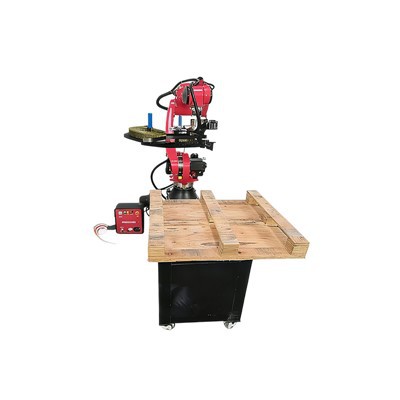
If you’re a construction manager, automation engineer, or business owner looking to reduce nail gun-related injuries, boost productivity, and cut callback costs, our nail gun robots are designed to meet your needs. Every safety feature we build is tested in real job sites, not just in a lab, because we know that on-site conditions are never as perfect as a simulation. To learn more about our models, request a demo, or discuss a custom solution for your specific work environment, reach out to our team today. We’ll work with you to assess your current safety protocols, identify risk points in your nail gun tasks, and show you how our robots can make your job site safer and more efficient.
Nail Gun Robot References
- Occupational Safety and Health Administration. (2022). Guarding and Safety Devices for Power Tools: Manual Nail Guns. U.S. Department of Labor.
- Construction Safety Association of Ontario. (2023). Collaborative Robot Safety for Construction Applications. Ontario Ministry of Labour, Training and Skills Development.
- International Code Council. (2021). Building Code Requirements for Fastener Installation and Safety. International Code Council.
- Journal of Construction Engineering and Management. (2022). Collaborative Robots in Construction: Safety and Productivity Impacts. American Society of Civil Engineers.
- National Institute for Occupational Safety and Health. (2023). Preventing Nail Gun Injuries in Construction Work. Centers for Disease Control and Prevention.
Dongguan Chuanglida Intelligent Equipments Co., Ltd.
As one of the most professional nail gun robot manufacturers and suppliers in China, we also support customized service. Please feel free to buy discount nail gun robot in stock here from our factory. For price consultation, contact us.
Address: Room 201, Building 2, No. 61, Shachang 1st Road, Dalang Town, Dongguan City, Guangdong Province
E-mail: haoguangli001@outlook.com
WebSite: https://www.boruntestech.com/
