Hey folks, if you’ve ever worked with PMDC motors (that’s Permanent Magnet DC motors, for the acronym newbies), you’ve probably heard someone throw around “speed regulation” like it’s some secret code only engineers get to crack. And as a PMDC motor supplier, I’m here to tell you—it’s not rocket science, and it’s way more important than you think. Last month, I got a call from a small robotics startup panicking because their prototype’s motor was dropping speed so bad when they added a load, their robot stopped mid-task. They thought they’d messed up the motor pick, but really, they just didn’t grasp how to calculate speed regulation to get the right fit. That’s why I’m breaking this down today—no stuffy textbook jargon, just real talk that works for anyone buying, building, or troubleshooting PMDC motors. Permanent Magnet DC Moto
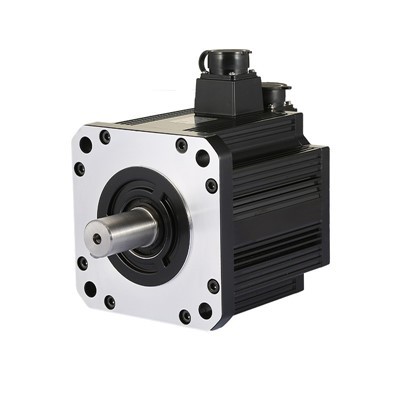
First, let’s get on the same page about what speed regulation actually is. Let’s start with basics: a PMDC motor has a permanent magnet on the stator (the stationary part), so there’s no field current like in other DC motors—its magnetic field is constant, which is why PMDCs are so popular for things like electric scooters, small conveyor belts, and medical pumps. Speed is tied to two main things here: the voltage you feed it, and the load you put on the motor. The key thing about speed regulation is how much the motor’s speed drops when you crank up the load from nothing (that’s no-load) to its full rated load (the maximum torque it’s made to handle). Put simply, if your motor hits 1,000 RPM with no load, and drops to 900 RPM when you run it at full power, that’s a 10% speed regulation. If that drop is too big for your application, your machine’ll be inconsistent—like a conveyor that slows down when you pile more boxes on it, or a drill that loses torque when you push hard into wood.
Wait, but why does that speed drop happen anyway? Let’s keep it simple—no physics degree required. When there’s no load, the only thing fighting the motor’s rotation is tiny stuff like friction and wind resistance, so it spins fast. When you add load (say, turning a wheel or lifting a part), the motor has to push harder, and that causes a little voltage drop across the motor’s internal resistance—we call that armature resistance, since it’s in the rotating part (the armature). That extra resistance drop means less voltage is left to spin the motor, so speed dips. PMDC motors, by the way, generally have lower speed regulation than other DC motors because their permanent magnets give a consistent magnetic field, but it still varies depending on the motor’s build.
Now, the fun part—calculating it. This is the part most new buyers overcomplicate, but it’s dead simple, I promise. First, you need two numbers straight from the motor’s spec sheet—every reputable PMDC motor supplier will have these, so if yours doesn’t, run. The numbers are:
- No-load speed (let’s call that N₀) – this is the RPM the motor spins when it’s turned on, with nothing connected to its shaft, at its rated voltage.
- Full-load speed (let’s call that N_FL) – this is the RPM at its rated voltage, when it’s spinning at its maximum specified torque (that’s the full load it’s made to handle).
The formula is stupidly straightforward: Speed Regulation = [(N₀ – N_FL) / N_FL] × 100. That’s it. Let’s test this with a real example from a motor we sell right now—our 24V 100W PMDC gear motor. Its spec sheet says N₀ is 3,000 RPM, and N_FL is 2,850 RPM. Plugging in: [(3000 – 2850) / 2850] × 100 = (150 / 2850) × 100 ≈ 5.26%. So that motor’s speed regulation is about 5.3%—super tight, perfect for applications where speed consistency matters, like a medical pump that can’t deliver the wrong dose because the motor slowed down.
Wait a second—what if you don’t have a spec sheet? Or you’re testing a motor you already have and need to calculate it yourself? I’ve had customers ask me this all the time, so here’s how to do that. First, get a tachometer—you can get a cheap contact tach for like $20 on Amazon, it’s worth it. Hook up your motor to its rated power supply, let it run, measure its no-load speed (spin it free, no load on the shaft). Then, attach a known load to the motor—you can use a small dynamometer if you’re serious, but for most hobbyist or low-power applications, a pulley with a known weight hanging off a string works. Turn on the motor, let it stabilize, then measure that full-load speed. Plug those two numbers into the same formula, and boom—you’ve got your speed regulation.
But hold up—there are a few gotchas here that’ll mess up your calculation if you skip them. First, make sure you’re using the same voltage for both no-load and full-load tests. If you run the no-load test on 24V and the full-load test on 23V, your numbers are garbage. That’s a common mistake new people make. Second, what’s “full load” anyway? It’s not just cranking the load until the motor stalls—stall is bad for PMDC motors, it can overheat them. Full load is the rated torque specified by the manufacturer, which is the maximum continuous load the motor can handle without damaging itself. Stalling torque is way higher than full-load torque, so don’t use that for N_FL. Third, remember this formula works for PMDC motors specifically—if you were calculating for a different type, it’d be a tiny bit different, but since we’re here talking about PMDCs, that’s all you need.
Now, why does this matter for you, especially if you’re working with PMDC motors? Let’s circle back to that robotics startup I mentioned earlier. They were building a small assembly robot that needed the gripper to move at an exact 100 RPM, even when it was lifting a 5kg part. They had picked a motor with 15% speed regulation, which would drop their speed to ~85 RPM under load—enough to throw off their part alignment. I walked them through calculating what regulation they needed: they needed less than 5% regulation, so we suggested our 12V 50W PMDC motor, which has 4.8% regulation. Their prototype ran perfectly after that. That’s the difference between a motor that works and one that’s a headache.
Another example: if you’re building an electric scooter, you don’t want your top speed dropping 20% when you have two people on board—no one wants to be huffing uphill at half speed. That’s why scooter PMDC motors have tight speed regulation. On the flip side, if you’re building a small hobbyist RC car that doesn’t need hyper-precise speed, a motor with 10% regulation is totally fine and cheaper. So speed regulation isn’t a “better = more expensive” thing—it’s matching the motor to your application’s needs.
Wait, can you improve speed regulation on a PMDC motor? That’s another question I get a lot. The short answer is: PMDC motors themselves have fixed regulation based on their design, but you can adjust it with external components. The most common way is adding a speed controller with feedback—like a closed-loop controller that uses an encoder to measure actual speed, and tweaks the voltage going to the motor to make up for any speed drop. For example, if your motor’s speed drops from 1,000 RPM to 950 RPM under load, the controller will bump up the voltage a little to get it back to 1,000. This takes a motor with, say, 10% open-loop regulation and makes it act like it has 1% regulation, which is great for precise applications. But that’s extra cost—so you have to decide if you need that. If your conveyor belt only needs to stay within ±5 RPM, and your motor’s open-loop regulation is 5%, you don’t need a fancy controller.
A quick reality check from my side as a supplier: I see too many customers guessing at speed regulation, and that leads to returns, delays, and bad projects. When you’re browsing PMDC motors, don’t just look at power or voltage—ask for the speed regulation number, or calculate it yourself using the formula I gave. If a supplier won’t share that spec, that’s a red flag—we publish all our motor specs, including speed regulation, right on our product pages, because we want our customers to pick the right motor the first time.
Let’s recap the steps to make sure this sticks, no notes needed:
- Grab the motor’s no-load speed (N₀) and full-load speed (N_FL) from the spec sheet, or test them with a tachometer at rated voltage.
- Plug them into the formula: [(N₀ – N_FL) / N_FL] × 100.
- Compare that percentage to your application’s requirements—if a 5% speed drop is okay, go with a cheaper motor; if you need tight speed, pick a motor with low regulation, or pair it with a closed-loop controller.
Wait, one last thing: people sometimes mix up speed regulation with speed control, but they’re not the same. Speed regulation is a property of the motor itself—how much its speed changes with load. Speed control is adjusting the motor’s speed to a different set point, like using a potentiometer to make your robot go slower. They work together, but regulation is the base number you have to get right.
If you’re working on a project and aren’t sure which PMDC motor will work for your needs, or you want to double-check your speed regulation calculation, I’m here to help. No pressure, no sales pitch (okay, maybe a little, but I’m not going to push a motor that’s wrong for your project). Just reach out, tell me about your application, your load, your speed requirements, and I’ll walk you through picking the right motor, or even verifying your numbers to make sure you don’t end up with the same problem that robotics startup had last quarter. We’ve been supplying PMDC motors for over a decade, so we’ve seen every speed regulation mistake there is—let’s help you avoid them.
AC Gear Motor References
- DC Motor Principles and Applications, McGraw-Hill Education, 2019
- Permanent Magnet DC Motor Design and Performance Specifications, IEEE Transactions on Industrial Electronics, vol. 65, no. 12, 2018
- Motor Speed Control and Regulation: A Practical Guide, National Electrical Manufacturers Association (NEMA), 2021
Zibo Auric Mechanical and Electrical Technology Co., Ltd.
As one of the leading permanent magnet dc moto manufacturers and suppliers in China, we warmly welcome you to buy advanced permanent magnet dc moto for sale here from our factory. All customized motors are with high quality and competitive price.
Address: B419, High-tech Entrepreneurship Park, High-tech Zone, Zibo City
E-mail: cui@auricmotor.com
WebSite: https://www.auricmotor.com/
