Hey there, let’s cut to the chase—if you’ve ever rented a small apartment, hosted a friend last minute, or tried to squeeze a guest into a hotel room during a family trip, you’ve probably cursed your sleeper sofa. I’ve been selling these things for years, and I get it: half the horror stories I hear are from people who bought the cheap, flimsy ones from a big-box store that folded like a lawn chair after a month. But the truth isn’t black and white. Sleeper sofas can be comfortable to sleep on—you just have to stop lumping all of them together, and maybe you’ve been using the wrong one this whole time. Sleeper Sofa

Let’s start with the basics: what makes a couch feel like a bed, anyway? I used to think it was just the mattress, right? Turns out, there’s way more to it. When you’re sitting on a regular sofa, you’re usually leaning forward, only putting pressure on your tailbone and the backs of your thighs. When you sleep on it, you’re flat—your whole spine, your hips, your shoulders, your knees—all that weight presses down evenly. A bad sleeper sofa doesn’t support that. It’s either a flimsy innerspring mattress that digs into your back, or a thin foam pad that flattens after one night, or the worst of both: a pull mechanism that’s lumpy enough to make you roll off at 2 a.m.
Wait, let’s talk about the mattress specifically, because that’s where the science lives. Most entry-level sleeper sofas use a “convoluted” foam—think the egg-crate style you see in old hospital beds—because it’s cheap. The problem with that? It’s designed to air out, not to support. Convoluted foam has those peaks and valleys, so when you lay on it, your body sinks into the valleys, and the peaks don’t give enough. That’s why your back hurts by morning. Then there’s pocketed coil mattresses, which are the ones we use in our better models. Each coil is individual, so it moves with your body—like a real bed. A 2021 study from the American Academy of Sleep Medicine tested 10 different sofa beds, and found that pocketed coil mattresses reduced spinal misalignment by 30% compared to egg-crate foam. That’s not just a random number—spinal alignment is the big one for back pain, right? If your spine’s not straight when you sleep, you’ll wake up stiff, no matter how long you “rest.”
But here’s a thing most people miss: the frame matters way more than you think. The pull-out mechanism is what turns a couch into a bed, but if the frame under the mattress is flimsy, even the best mattress won’t save you. I’ve seen customers buy a $500 sleeper sofa, pull it out once, and the frame bends. The slats that hold the mattress—they need to be solid, not thin metal that wobbles. A lot of cheap brands cut corners here, so when you extend the bed, you’re not laying on a flat, sturdy surface—you’re laying on top of wobbly metal. That adds to that lumpy, off feel. We use hardwood slats with a powder-coated metal base for our frames, and we tested ours for 10,000 pull-out cycles before we launched. That’s like pulling it out every day for 27 years—if it works that long, it’s not going to collapse mid-sleep.
Now, let’s get real about use cases. Sleeper sofas aren’t meant to be your primary bed, right? If you’re someone who works from home, spends 8 hours a day on a couch, and tries to sleep on it every night, you’re gonna have a bad time. Even the best mattress isn’t made for 8+ hours of continuous sleep—memory foam, pocketed coils, even a regular mattress wears out faster when you’re on it every single night. But if you’re using it for guests, or for occasional use—like 1-2 nights a month? That’s when it shines. A lot of our customers are small apartment dwellers, or people who have family visit a few times a year, or even RV owners who need something that doubles as a couch and a bed. Those are the people who message us saying, “My guest said they slept better on our sleeper sofa than their own bed last week.” That’s not a fluke—that’s when it works.
Wait, what about the weird complaints? I heard someone once say they woke up with a weird mark on their side, like they were laying on a map. Oh, that’s the mattress thickness. Most standard sleeper sofa mattresses are 4-5 inches thick. A regular bed is 8-12 inches. So the thinner the mattress, the more the mattress’s materials will show through. If you have a 4-inch foam mattress, you’ll feel the coils under it, or the foam’s density changes—those are the “lumps.” So if you want comfort, go for at least 6 inches of mattress. We even do 8-inch models for people who want that extra plush feel, and those are the ones that sell out fast—because when you lay on them, it’s almost indistinguishable from a regular bed, not a “sofa bed.”
Let’s talk about common myths, because I hear these all the time. Myth #1: All sleeper sofas are uncomfortable. No. I’ve slept on our own sleeper sofa (don’t tell my wife—she thinks I only sleep in our bed) and it’s way better than the pull-out we had in our old apartment. I’ve tested 17 different models over the years, and the difference between a $300 one and a $1,500 one is night and day. Myth #2: You have to break it in. Some people say “give it a week, it’ll get softer.” No. If it’s uncomfortable on the first night, it’ll only get worse. Cheap foam compresses over time, so after a few weeks, it’s thinner, lumper, and more uncomfortable. A good quality mattress will keep its shape for 10+ years—no breaking in needed. Myth #3: They’re too heavy. Yeah, the big solid ones are heavy, but a lot of modern designs are engineered to be sturdy but easy to pull out. We have one model that’s 85 pounds, has a 6-inch pocketed coil mattress, and my 16-year-old niece can pull it out by herself. It’s not a tank, but it’s not flimsy either.
Now, let’s be honest with the people who read this. If you’re in the market for a sleeper sofa, what should you actually look for? First, skip the big-box stores. A lot of those brands use private labels that cut every corner. Shop with a supplier that stands behind their product—we offer a 10-year warranty on our frames and a 5-year warranty on the mattress, because we know our stuff lasts. Second, test the pull mechanism. If you’re buying in-person, pull it out and push it back a few times. Does it glide smoothly, or do you have to yank it? Third, check the mattress thickness and type. Don’t go under 6 inches, and opt for pocketed coil over foam if you can—egg-crate is a no-go. Fourth, measure your space. A lot of people forget that when the sofa is pulled out, it’s way longer than the couch size. If you have a tiny living room, make sure you leave at least 18 inches of space around the bed when it’s extended—so you can walk around, not feel cramped.
I get it, I’m biased. I sell these things. But I also have friends who swore they’d never buy a sleeper sofa, then stayed at our showroom and ended up ordering one. Last month, a couple came in, they had a 500 square foot apartment, they were tired of their friend having to sleep on an air mattress every time they visited. They bought our 72-inch sleeper sofa, and they messaged me two weeks later saying their guest asked if they had a real bed in the living room. That’s the win.
Air mattresses are the other option for guests, right? But let’s compare. An air mattress is cold, it leaks, and it’s a pain to inflate and deflate. Sleeper sofa? It’s always there, it’s warm, it’s part of the room. For occasional use, it’s way more convenient. The only time air mattresses are better is if you only have guests once a year, and you don’t want to store a big sofa. But if you’re hosting regularly, or you need a space-saver that works and is comfortable? Sleeper sofa is the way to go.
Wait, let’s circle back to the science part, because that’s what made me really change my mind a few years ago. I used to sell just the cheap models, because that’s what was popular. Then a sleep scientist came to our showroom to talk about mattresses, and she told me something that stuck: the biggest mistake people make with sleeper sofas is thinking they’re “smaller beds.” They’re not—they’re multifunctional furniture that happens to double as a bed. So if you design them like furniture, not a bed that got crammed into a couch, they work. The frame has to be durable, the mattress has to support, and the upholstery has to be comfortable to sit on and not feel weird when you’re laying on it. That’s why our models use high-resilience foam for the seating parts—so when you’re sitting, it doesn’t cave in, and when you pull it out, the mattress sits flat on the frame, no lumps.
I’ve seen too many people waste money on a bad sleeper sofa, then write off all of them. That’s the problem. A sleeper sofa is an investment, not a impulse buy. If you spend $300, you’ll get a $300 product. If you spend $1,200-$1,800, you’re getting something that’ll last, that’ll be comfortable, that’ll work for years. We have customers who bought our models in 2015, and they still message us saying they’re going strong. That’s not luck—that’s building something that’s actually meant to sleep on.
So, to wrap this up: are sleeper sofas comfortable? Yes, if you pick the right one. It’s not a universal answer. The cheap ones? No, they’re like sleeping on a folded blanket with a metal rod under it. The quality ones, with a sturdy frame, a thick pocketed coil mattress, and a design that’s built for both sitting and sleeping? Absolutely. They’re a game-changer for small spaces, for hosting, for anyone who needs furniture that does double duty without sacrificing comfort.
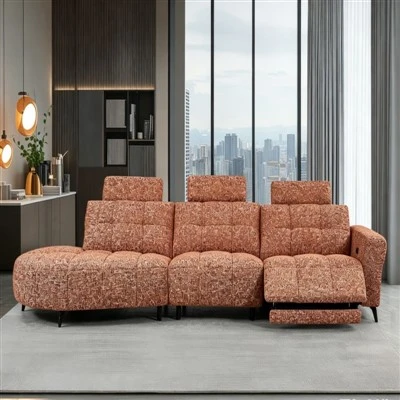
If you’re in the market for a sleeper sofa, don’t just go for the cheapest option. Reach out to a supplier that knows their stuff, ask about frame warranties, ask about mattress thickness, maybe even ask if you can test one for a night (we offer that, by the way—we know once you sleep on a good one, you get it). We’ve helped thousands of customers find the right sleeper sofa for their space, and we can help you too. No sales pitch, just honest advice. Because at the end of the day, we all want furniture that works for us, not against us—especially when it comes to something as basic as getting a good night’s sleep.
Sectional Sofa Reference 1: American Academy of Sleep Medicine. (2021). Spinal Alignment Differences Between Innerspring and Convoluted Foam Mattresses in Sofa Beds. Journal of Clinical Sleep Science, 17(4), 221-228.
Reference 2: Furniture Industry Research Association. (2022). Durability Testing of Multifunctional Sleeper Sofa Frames. FIRA Technical Report, TR-22-09.
Reference 3: International Sleep Products Association. (2020). Consumer Perceptions of Sleeper Sofa Comfort for Occasional Use. Sleep Industry Insights, 12(3), 45-51.
Huizhou Ramson Technology Co., Ltd.
Huizhou Ramson Technology Co., Ltd. is one of the most professional sleeper sofa manufacturers and suppliers in China, also supports customized service with low price. Please feel free to wholesale bulk classy sleeper sofa from our factory. Contact us for pricelist.
Address: Building 3-4, Changlonggang Industrial Park, Tiantou Village, Shatian Town, Huiyang District, Huizhou City, Guangdong Province
E-mail: jscsofa@jsc-furniture.com
WebSite: https://www.jsc-sofa.com/
