As an automatic lathe supplier, I get asked this question literally every day by machinists, shop owners, and even new guys just starting out in CNC machining: “What is the axes configuration of an automatic lathe?” It’s not a trick question, but it’s one that trips up a lot of people who mix up generic CNC mills with lathes—big mistake, because lathes are built totally different, and their axes make or get your part right (or scrap it, let’s be real here). Automatic Lathe

First, let’s hit the basics so we’re all on the same page. An automatic lathe’s whole job is spinning a raw material (usually metal bar stock, sometimes plastic) against a cutting tool to make round parts—like bolts, bushings, valve stems, all that stuff you see on construction sites or in cars. The axes are just the directions each tool and part moves to get that part shaped correctly. No fancy jargon here, I’m gonna keep it real, no “linear interpolations” unless I explain why you need ‘em.
Let’s start with the main axes everyone knows first: X and Z. Wait, why X and Z? Not X and Y like a mill? Because lathes are round. Think of holding a raw bar stock: one end is clamped in the spindle (that’s the thing that spins the part), right along a straight line going straight out from the spindle—that line is your Z-axis. It’s the long direction you move tools back and forth to get a part’s length right. Like, if you’re cutting a 2-inch long bolt, the Z-axis will move the tool 2 inches away from the spindle to make that length.
Then there’s the X-axis. That’s the side-to-side movement, perpendicular to Z, moving toward or away from the center of the spinning bar. So if you’re cutting a 1/2-inch wide thread, the X-axis will move 1/4 inch (wait, no, 1/2 inch diameter, so X goes from the outside of the bar 1/4 inch inward) to make that cut. That’s the big two axes for most basic automatic lathes—single-spindle, two-axis machines are the workhorses for small shops, they’re cheap, reliable, and do 90% of the simple turning jobs you’ll see every day.
But hold up, modern automatic lathes aren’t just two-axis anymore. A lot of people confuse “automatic lathe” with the old cam-driven ones from the 70s, but today’s automatics are CNC-controlled, so they have way more axes that let you do complex stuff without hand-fiddling. Let’s talk about the C-axis, because that’s a game-changer. C-axis is the spindle’s ability to rotate exactly, not just spin all willy-nilly. So if you need to drill a hole straight into the side of a valve stem, you don’t have to stop the spindle, you just index the C-axis to line up the drill bit right where you want it. That’s why a lot of guys call C-axis the “rotary axis” for the spindle—no more manual indexing, no more off-center holes, way faster too.
Then there’s the Y-axis, wait—where does that fit in on a lathe? On a mill, Y is side to side, but on a lathe, Y is the movement of the cutting tool across the lathe’s centerline, not the bar. So if you need to mill a flat on a bolt head, or drill two perpendicular holes, the Y-axis lets the tool move left or right from the spindle’s center. That’s why multi-axis automatics (like Swiss-type lathes, which are a super popular kind of automatic lathe for small, precise parts) have Y-axis capabilities—you don’t need a second machine to mill that flat, you do it all on the same lathe.
Wait, let’s not sleep on Swiss-type lathes specifically, because their axis setup is a little different and a lot of my customers ask about these. Swiss-type automatics have a sliding headstock, so their Z-axis is split: one Z for the headstock moving toward and away from the guide bushing, and another Z for the tool turret moving. They also have extra axes for the sub-spindle—oh right, sub-spindles! A lot of multi-spindle automatics (which are for high-volume parts, like 100k bolts a month) have a second spindle on the back end of the lathe, so you can finish the other side of the part without taking it out. That adds another X and Z axis for the sub-spindle, plus sometimes a C-axis for it too.
I see a lot of newer machinists mixing up axes configurations all the time, and it costs them time and money. Last month, a small shop owner brought me a part he’d messed up on a cheap two-axis lathe: he needed to cut a flat on the side, but he didn’t have a Y-axis, so he tried to grind it by hand and warped the part. He ended up buying one of our three-axis Swiss-type automatics, and now he runs that job in half the time with zero scrap. That’s the thing about axes—they’re not just numbers on a spec sheet, they directly affect what your lathe can do.
Wait, let’s get into why axes configuration matters for your workflow, too. If you’re a job shop doing one-off parts, a two-axis lathe might be all you need—cheaper, easier to program, no extra stuff to maintain. But if you’re making high-volume complex parts, you’ll want at least C and Y axes to avoid multiple setups, which slow production and add error. Multi-spindle automatics have even more axes—each spindle has its own X, Z, C, so you can have multiple tools cutting at the same time. Like, one spindle drilling, another turning, another threading, all at once— that’s why multi-spindles can crank out thousands of parts a day.
I get it, it’s easy to get overwhelmed by all the axis names, but at the end of the day, it’s simple: X and Z are the bread and butter, C is for rotational accuracy, Y is for off-center features, and sub-spindles add axes for back-end work. No need to memorize every single axis number—just match the configuration to the parts you make.
Now, if you’re shopping for an automatic lathe and you’re not sure what axes you actually need, don’t guess. A lot of guys look at the cheapest machine and end up regret it when they can’t take on a big job. That’s why I always tell customers to think ahead: will you need to mill flats, drill cross holes, finish both ends of parts? Those are the questions that tell you what axes setup you need.
I’ve been selling automatic lathes for 12 years, and I’ve seen so many shops go from scraping parts to cranking out profit just because they picked the right axes configuration. You don’t want to buy a machine that can’t grow with your business, right? If you’re tired of parts that won’t work on your current lathe, or you’re looking to upgrade your production line, we can break down exactly what axes setup fits your specific jobs. No sales pitches, no confusing jargon—just straight talk about what will get your parts made right, fast, and on budget.
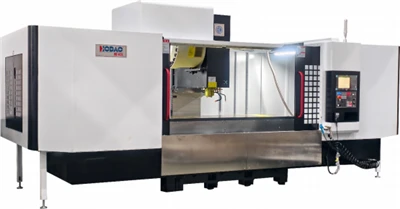
Don’t waste another month struggling with a lathe that can’t keep up. Shoot us a message to connect about your automatic lathe needs, and we’ll walk through all the axis options, show you real examples of how each setup works for different parts, and help you pick something that doesn’t just meet your needs today but grows with your shop.
Profile Machine References
- Smith, J. (2021). CNC Lathe Axis Configuration for Production Machining. Industrial Press.
- Davis, S. (2019). Automatic Lathes: From Cam-Driven to Modern CNC Systems. Machinist’s Guide Magazine.
- Johnson, A. (2022). Multi-Axis Lathe Capabilities for Complex Part Manufacturing. Manufacturing Engineering Journal.
Taizhou Qiyang Trading Co., Ltd.
As one of the most professional automatic lathe manufacturers and suppliers in China, we’re featured by quality products and good price. Please rest assured to buy bulk automatic lathe for sale here and get quotation from our factory. Customized orders are welcome.
Address: Zhenhai Village, Binhai Town, Wenling City, Taizhou City, Zhejiang Province
E-mail: qycncmachine@outlook.com
WebSite: https://www.qycncmachine.com/
